Paragliding or Skydiving: Which air sport is right for you?
Trust in Delta Evasion’s reputation
Share this article:
Air sportsare fascinating. From the ground, eyes are drawn to those silhouettes dancing in the sky. Some glide slowly beneath their colorful wings. Others slice through the air at full speed beforetheir parachute opens. Two very distinct ways of exploring the sky, two philosophies of flight. Between the poetry offree flight andthe thrill ofjumping into the void, each discipline attracts a different audience. But which type of flight should you choose: paragliding or skydiving? A comparison of these two ways to take to the skies.
What are the differences between paragliding and skydiving?
Paragliding: a long, level flight
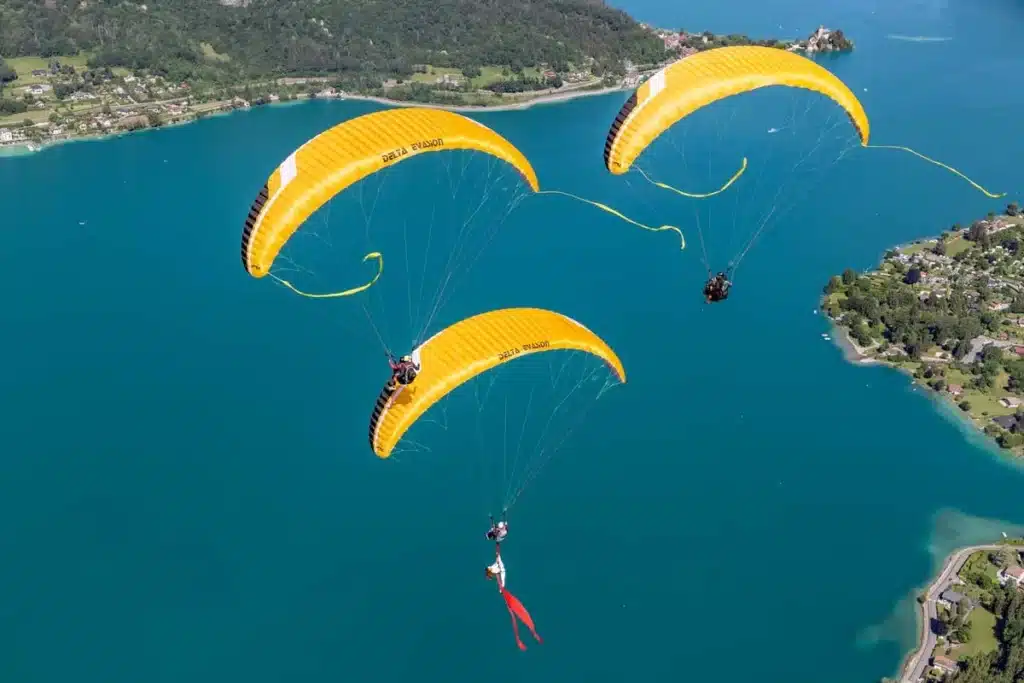
A grassy slope. A light breeze. The wing gently fills with air on the ground. A few quick steps, and the pilot takes offinto the wind. The flight begins smoothly. The warm air of the thermals lifts the wing. Hours can pass, as long as the weather remains favorable. No engine, just the wind in the lines. That is the spirit of free flight: playing with the natural elements.
Skydiving: a free fall followed by a controlled descent
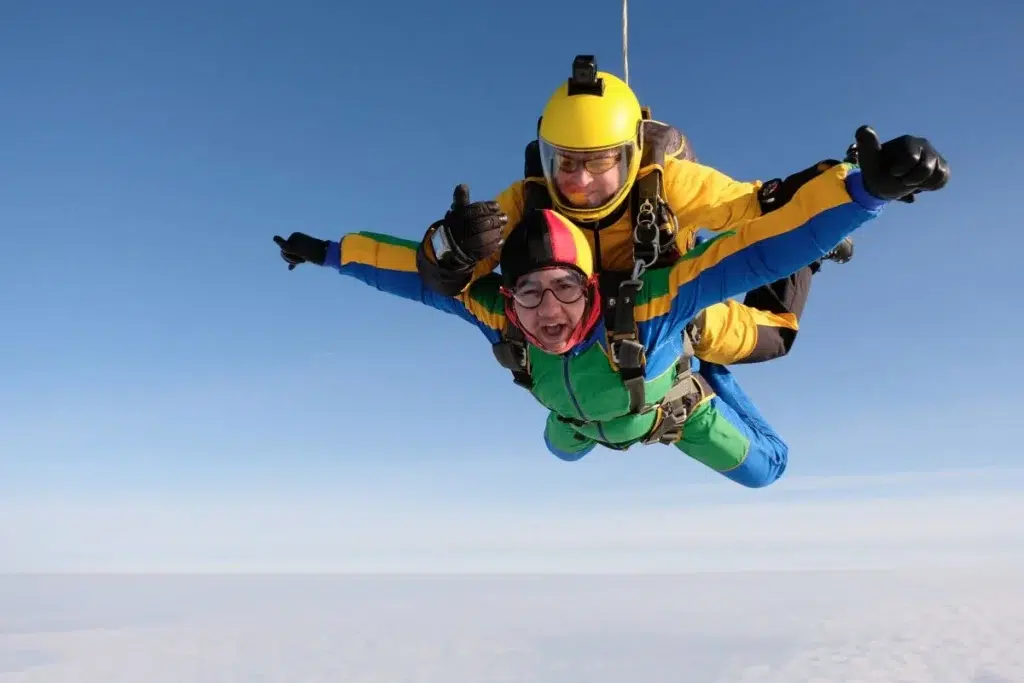
The plane climbs to 4,000 meters. The door opens. My heart races. One step into the void, and off I go on askydive. The Earth rushes by at 200 km/h during a minute of pure adrenaline. The parachute opens, bringing a moment of pause. The descent becomes calmer. Below, the target awaits—an orange circle that grows larger and larger.
Takeoff and landing techniques: two distinct approaches
Takeoffs? A leap into the void for the skydiver. A run down the slope for the paraglider.
The landings? A gentle touch for the first one, almost like a bird. A more technical landing for the second one, which needs to control its speed.
Everything about them is different: the equipment, the movements, the pace. Even the training follows different paths. While paragliding is anaircraft derivedfrom the parachute, the way it is used and flown makes it a distinct discipline.
Paragliding or skydiving: which experience is best for whom?
Paragliding: gliding, tranquility, contemplation, and freedom
Summer mornings at the launch site. The sun has barely risen, gently caressing the multicolored wing. No rush, just the pleasure of feeling the breeze pick up. A breath of fresh air, a few vultures already circling in the blue sky. Paragliding is above all about taking your time, observing, and feeling, even if some thrill-seekers will be tempted bymore daring maneuvers. Eyes scan the clouds, ears listen for the slightest breeze. Nature sets the pace.
Skydiving: an intense experience filled with adrenaline, speed, and thrills
3,500 meters above sea level. The plane’s engine has fallen silent. The door slides open. Onestep into the void, and time suddenly speeds up. The ultimate adventure. The ground approaches at 200 km/h. Your cheeks vibrate; the air slaps your face. These 50 seconds ofpure freefallare worth all the gold in the world. Nothing else exists except this dizzying dance with gravity.
How do you choose between paragliding and skydiving?
Accessibility: Are these sports suitable for everyone?
Aparagliding baptismor atandemskydiveallows beginners to experience these unique sensations without any commitment.
Yourfirstparaglidingflightiseasier toget into, but becoming truly independent takes several weeks of training.
Skydiving, on the other hand, hits you hard right from the start: equipment, jumps, and a license.
Toget started, you don’t need to be an athlete: all you need is to be in good physical shape, have a desire to learn, and approach the elements with humility.
Safety: Which type of aviation activity is the riskiest?
As with anyaerial sport, there is a risk, but it is managed through training and equipment. In paragliding,the dangerstems mainly fromweather conditionsand piloting skills. A misjudgment can lead to an incident, but the reserve parachute is there as a last resort.
In skydiving, the descent rate is much higher: 200 km/h in free fall! Yet the sport is regulated with rigor and precision. Every jump follows a strict protocol to minimize accidents. Safety depends on the equipment (main canopy and reserve), training, and adherence to instructions.
In terms of difficulty, paragliding requires the ability to read the air and patience to improve. Paragliders must bephysically fitenough to handle the deployment of the wing and manage landings.
The gear is substantial. Paragliding enthusiasts’equipmentoften fits into a backpack. It includes the wing, a comfortable harness for sitting in flight, and areserve parachutein case of an emergency. Safety also depends on a good helmet and a few accessories, such as a radio or an altimeter to track altitude and thermals. In skydiving, the equipment is more structured: a jumpsuit, a harness, and, of course, a parachute with itsmain canopyand automatic reserve parachute.A helmet is mandatory, especially for solo jumps.
Two different adventures, but one important rule in common: follow the instructions and use reliable equipment to fly with peace of mind.
Why not try paragliding with Delta Evasion?
Between jumping into the void and soaring through the air, you’ve made up your mind. Are you ready to take off, steer, and enjoy the view? You’re looking for the perfect destination and a school to make the most of your experience.
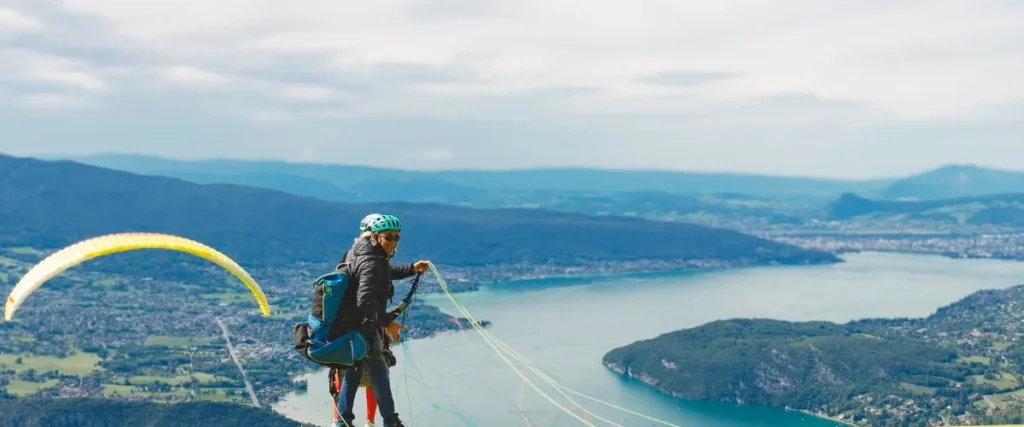
Looking for an unforgettable flying experience in France? Theinstructors at Delta Evasion share their passion and take you on anadventure over Lake Annecy. No prior experience or skill level is required—just a desire to discover themagic of free flight.
The Forclaz takeoff site offers breathtaking views of the lake’s turquoise waters, the surrounding landscapes, and the mountains. Conditions here are ideal almost all year round. Each flight tells a unique story between sky and earth. A clear briefing, modern equipment, and attentive professionals. Everything is designed to turn this first experience into an unforgettable memory. The Alps reveal their most beautiful secrets when viewed from above. A moment suspended in time, far from the noise and bustle.