Powered Paragliding, Paragliding, Microlight: Understanding the Differences to Fly Better
Trust in Delta Evasion’s reputation
Share this article:
Air sports captivate with their diversity. At flying sites, colorfulparaglidersshare the sky withroaring paramotorsand gleamingmicrolights. These three ways of taking to the skies share a common dream: the freedom of flight. Yet each discipline has its own character, advantages, and limitations. Between the majestic silence of paragliding, the versatility of the light motorized paraglider, and the ruggedness of the microlight, which aircraft should you choose to live out your passion for the skies? Here are the keys to understanding the differences, uses, and equipment of these aerial activities.
What are the differences between microlight aircraft, paragliding, and paramotoring?
Does a paraglider have an engine?
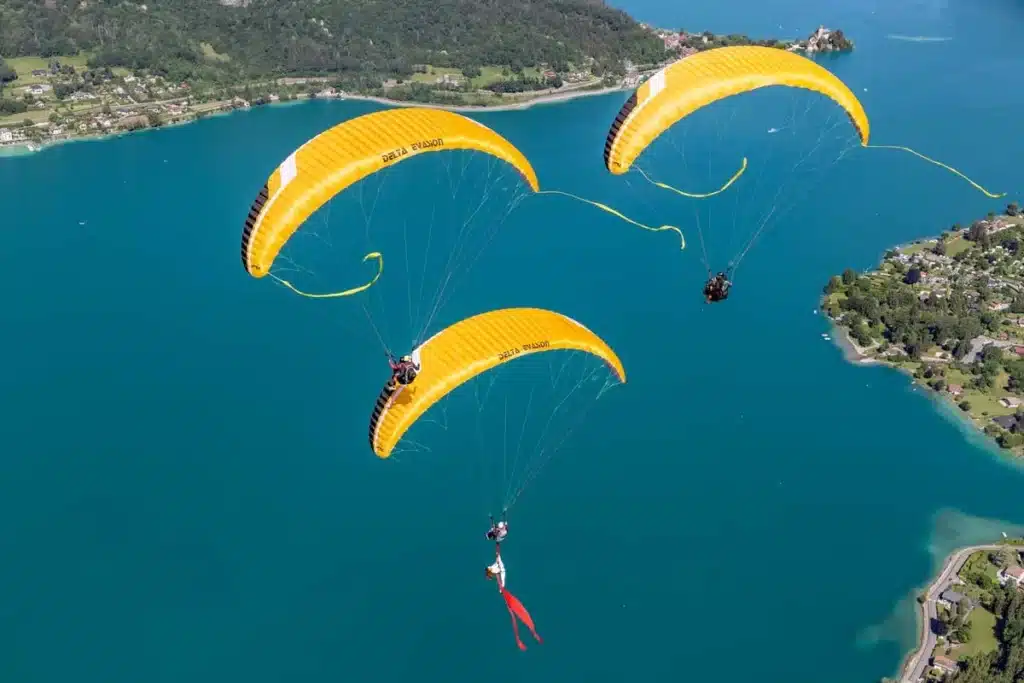
If we tracethe history of paragliding, this air sport emerged from the desire to harnessnatural updrafts. No engine, just a paraglider wing, a comfortable harness, a network of taut lines, and the thermals.
However, technological advances have led to the development ofpowered paragliders. This ingenious hybrid design combines the lightness of a traditional paraglider with the range of a small engine mounted on the pilot’s back. No longer do you have to wait for ideal conditions to take off and enjoy exploring magnificent landscapes
Powered paragliders vs. microlights: What are the key differences?
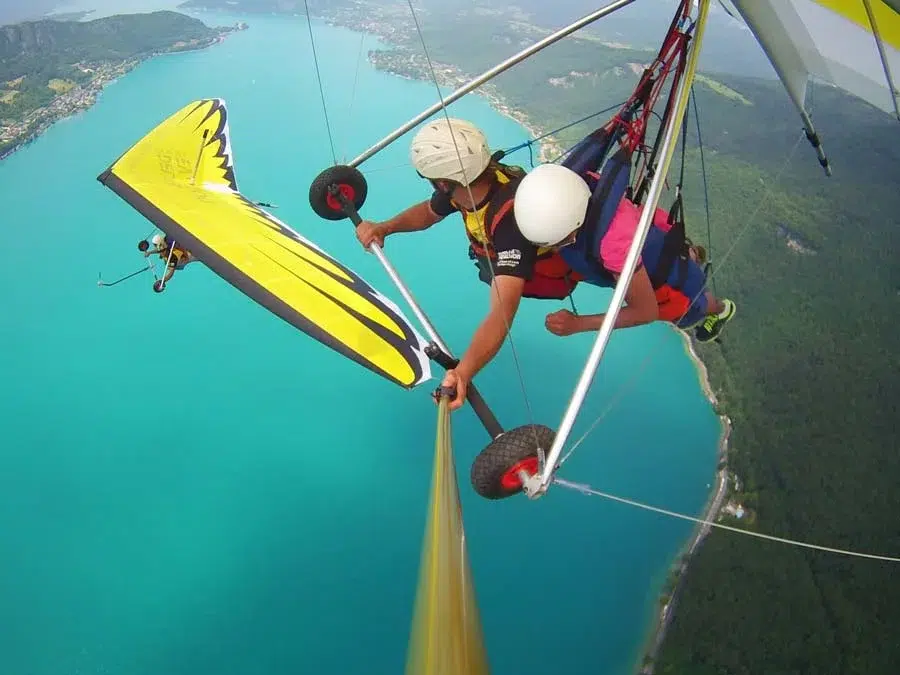
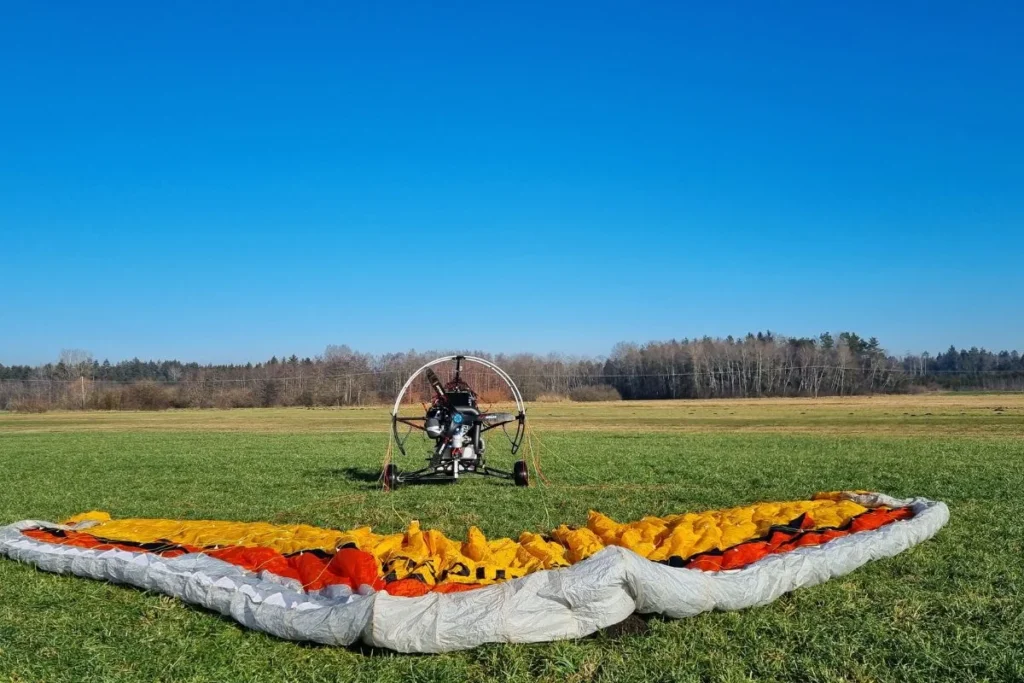
The microlight is more like a small airplane: it has a rigid frame, an enclosed cockpit for greater comfort, and takes off from a runway. The paramotor is an aircraft with an electric or combustion engine, mounted on a backpack harness or a cart designed for seated takeoffs. It retains the minimalist spirit of paragliding with a wing adapted for powered flight. A protective cage surrounds the propeller, while the pilot remains suspended beneath the wing.
The differences also extend to regulations, cost, and storage. Amicrolight pilotneeds a hangar, while aparamotor pilotstores their equipment in the trunk of a car.
In practical terms, here are the main differences between them:
A new microlight costs between €25,000 and €80,000, compared to €8,000 to €15,000 for a complete paramotor;
Pilot license training: Obtaining a microlight pilot license requires a minimum of 20 flight hours, while a paramotor license requires approximately 15 hours, including both the theoretical and practical flight components;
flight time: 4 to 6 hours for a microlight, compared to 2 to 3 hours;
speed: 100–140 km/h in a microlight versus 30–50 km/h.
Paragliding or paramotoring: which one should you choose as a beginner?
There are paramotors powered by electric or internal combustion engines. Both types of aircraft share the same philosophy: flying light with a motorized setup, allowing pilots to take off on foot from flat ground and fly freely, without needing mountains or a tow plane.
The main difference lies in how they are used. The newer electric paramotor is appealing because it is quiet and easy to maintain. The fuel-powered paraglider offers greater range.
For beginners, the choice will depend mainly on your goals, the time you have available, and the type of flight: short visual flights or longer aerial excursions?
Flight schools often recommend starting training sessions with traditional paragliding before considering flying a paramotor. This approach allows you to master the essential basics: taking off from the ground, reading the wind, controlling the wing, and takeoff and landing techniques. The motor will then naturally build upon these fundamental skills.
Why choose a powered paraglider or a paramotor?
What are the benefits of powered paragliding?
Powered paragliding frees you from the constraints of the weather. No more need to watch for thermals or wait for the perfect wind. A light breeze is enough to take off. It is still essential to carefully assess theweather conditions. The aerological conditions must be stable, with no significant turbulence, especially for a successfulfoot launch.Wind speedshould not exceed 20 to 25 km/h for beginner pilots to avoid difficult takeoffs or rough landings. You must also watch for overly strong or unpredictableupdrafts, which can make the flight unstable.
Motorized paragliding also opens up new possibilities: long-distance flights, exploring sites inaccessible to traditional paragliders, and easier returns to the starting point. Pilots gain greater independence without losing the pure thrill of free flight.
The electric paramotor: an eco-friendly and quiet option
Advances in electric technology are a game-changer. Electric paramotors are appealing for their soothing silence. Gone is the roar that scares away wildlife. Maintenance is simpler: no more oil changes, fewer wear-and-tear parts. Fast charging replaces gas cans. The only downside: flight time remains limited to a few hours.
Traditional paragliding: a more environmentally friendly alternative
Without an engine, traditional paragliding embodies flight in its purest form. Thermal updrafts naturally carry the wing skyward. This minimalist approach preserves the tranquility of the sites. Pilots develop a keen understanding of the air, the clouds, and the terrain. It is a lesson in patience and humility in the face of the elements.
What if you prefer paragliding without a motor? Check out Delta Evasion!
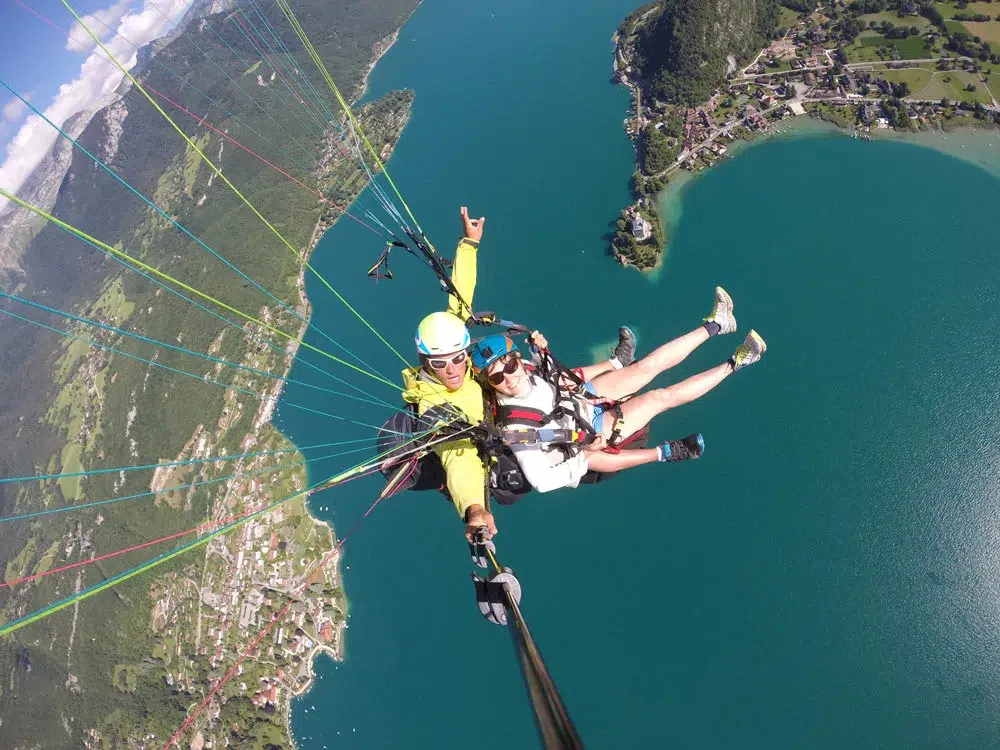
Are you interested in experiencing the thrill of your first paragliding flight? No prior experience required—Delta Evasion offers introductoryand tandemparagliding flightsin the heart of the Alps, with a qualified instructor for flights that are either smooth and serene or full of thrills. Take flight and glide over Lake Annecy. A pure and peaceful experience, with no engine noise—just the whisper of the wind in the wing and the beauty of nature spread out before you.
Dominique Cruciani
Dominique Cruciani a fondé Delta Évasion en 1979 et réalisé 45 000 vols en tandem au-dessus du lac d'Annecy. Découvrez le portrait du pionnier du vol libre en France.